
South Africa Moves to Reopen Trophy Hunts of Rhinos Elephants and Leopards
Matthew Russell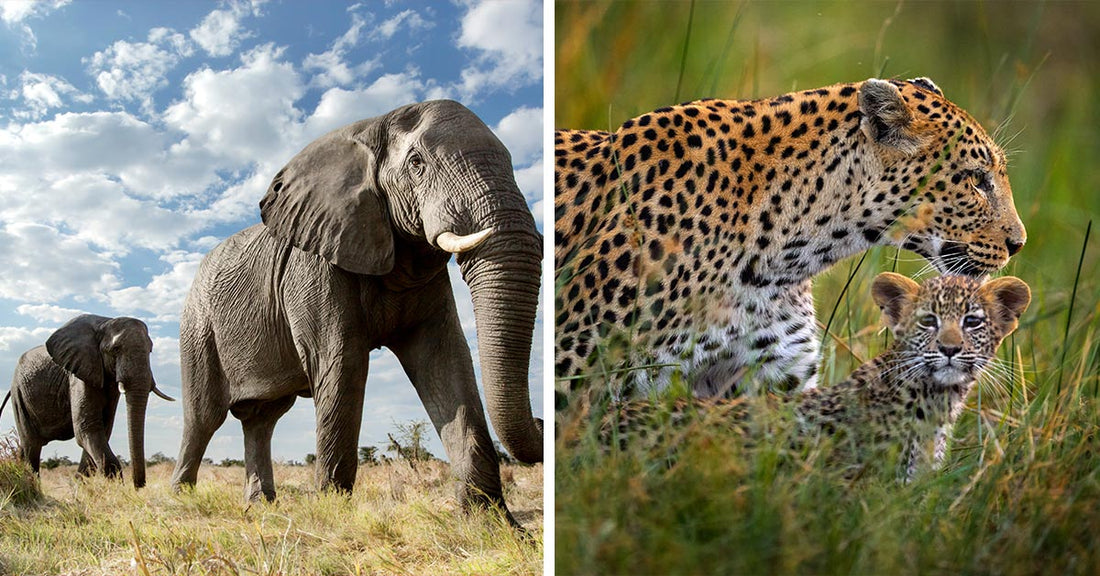
South Africa has reopened one of its most divisive conservation debates.
After a four-year pause, the government has proposed new export quotas for trophy hunting of elephants, black rhinos and leopards. The draft limits would allow 150 elephants, 12 black rhinos and 11 leopards to be hunted annually in 2026 and 2027, according to The South African .
The proposal has reignited questions about conservation science, governance and the future of some of Africa’s most iconic wildlife.

South Africa has proposed new trophy export quotas for elephants, black rhinos, and leopards.
What the New Trophy Hunting Quotas Propose
The Department of Forestry, Fisheries and the Environment has framed the elephant quota as sustainable, citing a national population of more than 43,500 animals and annual growth rates above 5%, as the Daily Maverick reports.
For black rhinos, classified as critically endangered, the draft allows 12 trophies per year. South Africa holds roughly 2,000 of the world’s 6,700 remaining black rhinos, according to figures reported by The South African. Under CITES guidelines, exports are typically capped at 0.5% of the national population — roughly 10 animals — raising questions about how the proposed number was determined.
Leopard exports would be limited to 11 designated hunting zones, one animal per zone, in areas where populations are considered stable or increasing.
Public comment remains open for 30 days before any final decision.

The proposal includes 12 black rhino trophies per year.
Science and Open Ecosystems Under Scrutiny
Population totals do not tell the whole story.
As Daily Maverick reports, most elephants live in protected areas such as Kruger National Park, where hunting is prohibited. Trophy hunts typically occur on private reserves bordering these parks. In open systems like Greater Kruger, elephants move freely across boundaries, meaning individuals hunted on private land may spend much of their lives in state-protected areas.
Research highlighted in the same report shows that older bull elephants — the animals most sought after for large tusks — play key roles in social stability and genetic strength. Removing them can alter herd dynamics and, over time, reduce average tusk size.
Leopard data are also contested. According to earlier reporting in the African Elephant Journal, national population estimates vary widely, and reliable ageing of leopards in field conditions is difficult, raising concerns about enforcement of minimum age rules.
Black rhinos face their own pressures. The same outlet notes steep historical declines and ongoing poaching, with conservation groups arguing that any legal offtake risks reputational damage and market speculation.

Leopard population estimates vary widely across regions.
Economic Stakes in a R44 Billion Industry
Supporters point to economics.
Research from North-West University, cited by BusinessTech, estimates that hunting tourism contributes R44 billion annually and supports about 95,000 jobs. International hunters spend significantly more per trip than local hunters, and industry bodies claim that the suspension of export quotas since 2021 cost billions in revenue.
However, as the African Elephant Journal has reported, critics argue that trophy hunting represents a small fraction of overall tourism income and that benefits to local communities remain limited.
A Defining Moment for Wildlife Policy
The controversy reaches beyond numbers.
As detailed by Down To Earth, previous legal battles halted quotas over concerns about due process and consultation. The new proposals follow a change in ministerial leadership and have prompted renewed allegations of conflicts of interest and political influence.
At its core, the dispute asks whether endangered species can be treated as renewable assets in a regulated market, or whether their survival demands stricter limits.
The answer will shape not only South Africa’s wildlife economy, but the future of elephants, rhinos and leopards across a fragile landscape.
Click below to make a difference.