Lions, Tigers And Bears Remain Trapped In A Cruel Life On The Road
Matthew Russell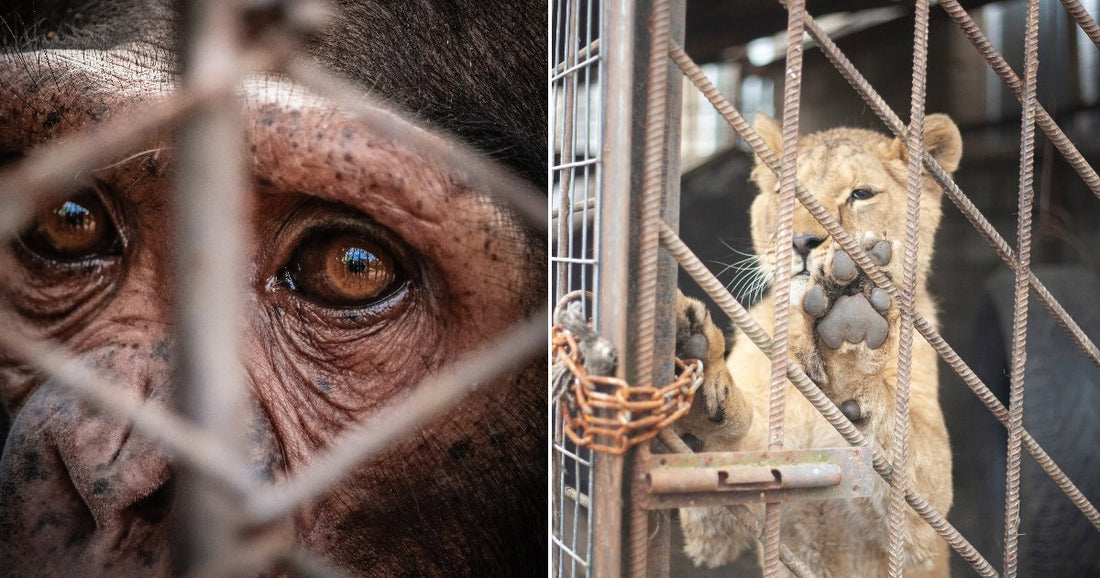
Lions, tigers, bears, nonhuman primates, kangaroos, and wallabies can still be transported between circuses, fairs, exhibitions, and other public performances across New York.
These traveling acts move animals in trucks, trailers, railway cars, and temporary enclosures. The animals may spend much of their lives confined, displayed, and transported for the sake of entertainment.
New York prohibited elephants from entertainment acts in 2017. Other species, however, remain exposed to a patchwork of state and local protections.
A bill passed by the New York Legislature would establish a broader statewide ban.

Traveling Shows Cannot Meet Wild Animals’ Needs
Wild animals have complex physical, behavioral, and social needs. Constant transportation and temporary housing make those needs difficult or impossible to meet.
A peer-reviewed study published in Animal Welfare examined whether wild animals are suited to traveling circus life.
Researchers identified forced movement, human handling, loud noise, trailer motion, confinement, inadequate housing, and repeated performances as serious welfare concerns. They also found that traveling operations have limited ability to provide enough space, environmental enrichment, and appropriate social conditions.
The study concluded that commonly exhibited species such as large cats are among those least suited to this type of life.
A 2024 review in the journal Animals examined the welfare of tigers in traveling circuses.
The review identified loading, unloading, transportation noise, cage motion, unfamiliar environments, and restricted housing as factors that can affect welfare.

Traveling animal acts transport wild animals between temporary performance sites.
New York Lawmakers Move To End The Exploitation
The New York State Senate and Assembly passed A.5850/S.3629-A during the 2025-2026 legislative session.
The bill would prohibit wild cats, bears, nonhuman primates, kangaroos, wallabies, and their hybrids from participating in traveling animal acts.
It would also direct the Department of Environmental Conservation not to issue permits or licenses that allow these animals to appear in traveling performances.
The prohibition would cover circuses, fairs, animal acts, carnivals, exhibitions, parades, trade shows, petting zoos, rides, and similar events in which wild animals perform or accompany entertainment for a live audience.
Permanent institutions and fixed facilities would remain exempt.
According to Humane World for Animals, the Assembly passed the bill 100-38 on April 28, 2026. The Senate followed with a bipartisan 54-8 vote on May 5.
The legislation now awaits action from Governor Kathy Hochul.

Bears have complex physical and behavioral needs.
Wild Animal Protections Vary Across The Country
Wild and exotic animal laws differ widely from state to state.
As FindLaw explains, states may prohibit, restrict, license, or exempt different forms of exotic animal possession and exhibition.
Some states have adopted broad bans on wild animals in traveling shows. Others protect only selected species or leave the issue to local governments.
New York’s legislation would replace that inconsistency with one statewide rule. It would also expand protections beyond the state’s existing elephant law.
One Signature Can End This Cruel Spectacle
Modern circuses and public performances can succeed through acrobatics, theater, music, technology, and human talent. Wild animals do not need to be confined, transported, and displayed to create entertainment.
The final decision now rests with Governor Hochul. Residents and animal advocates can call on her to sign A.5850/S.3629-A and end the use of wild animals in traveling performances.
Click below to make a difference.