
Wildfire Smoke Is Killing Americans While Congress Sits on a Proven Solution
Matthew Russell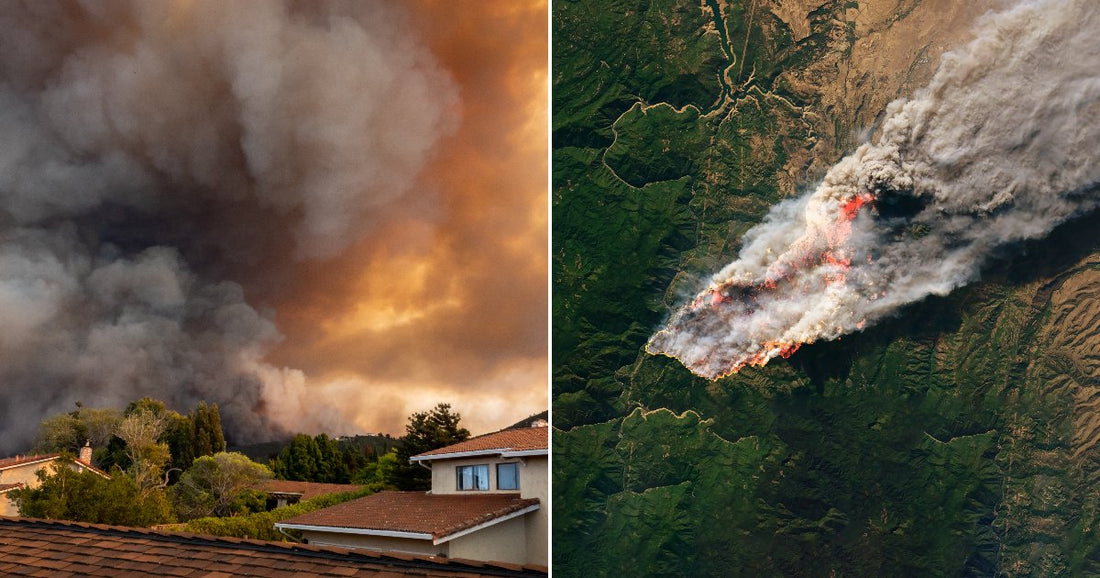
Every summer, millions of Americans breathe air thick with wildfire smoke. The health toll is serious: respiratory disease, cardiovascular stress, and elevated mortality risk, concentrated among children, the elderly, and communities already living near forests. What is becoming clearer to researchers and policymakers alike is that the problem is not simply fire itself — it is the wrong kind of fire, in the wrong place, with no plan.

Wildfire Smoke Versus Prescribed Fire Smoke: Not the Same Thing
A study published on arXiv (Cornell University) found that wildfire smoke and prescribed fire smoke carry meaningfully different risks. Wildfires burn at extreme intensity, release far more fine particulate matter, and expose communities for much longer stretches. Prescribed burns — carefully planned, lower-intensity fires set by land managers — generate smoke too, but at reduced concentrations and over shorter windows. The gap in health impact between the two is significant.
This distinction matters because it reframes the question. The choice is not between smoky air and clean air. It is between a brief, managed smoke event and a catastrophic, months-long wildfire that sends particulates across entire regions. Research reviewed by the American Lung Association found that, when properly executed, prescribed fire can reduce the risk and severity of future wildfires — meaning less total smoke exposure over time, not more.

The Fuel Load Problem Is Not Going Away
Decades of fire suppression have left forests across the American West and Southeast dangerously overstocked with dry vegetation. That accumulated fuel turns routine ignitions into uncontrollable megafires. The U.S. Department of Agriculture has flagged this buildup as a central driver of fire severity, and the agency has pointed to fuel treatments — prescribed burning, mechanical thinning, and targeted clearing — as essential tools for reducing it before fires start.
Scaling those treatments has been slow. Regulatory barriers, funding gaps, and liability concerns all limit how much prescribed burning federal and state land managers can actually conduct each year. Meanwhile, wildfire seasons grow longer and more destructive.

A Legislative Response Is in Motion
Congress is now considering the Wildfire Emissions Prevention Act of 2026 (WEPA), a bipartisan bill designed to streamline the approval process for prescribed burns while building in protections for nearby communities and air quality monitoring requirements. The Federation of American Scientists has analyzed the bill and supports its approach, noting that expanding access to evidence-based fuel treatments is one of the most direct ways to reduce the volume of harmful emissions from unplanned wildfires. The Property and Environment Research Center reported that the legislation advanced through the Senate with support from both parties — a signal that the political will to act is building.
Researchers writing in Environmental Science & Technology have called for stronger data infrastructure around wildland fire health impacts, including better air quality monitoring near burn sites and more community-level exposure tracking. Those safeguards are part of what makes the difference between a managed tool and a new hazard.

Communities Deserve Both Protection and a Say
Prescribed burning done well means communicating with nearby residents, monitoring air quality before and during burns, and protecting sensitive habitat. It means treating fire as a tool that requires training, oversight, and accountability — not a shortcut. The science supports expanding this work. The question is whether policymakers will act with the urgency the data demands.
Click below to make a difference.