
🚨Urgent: Missile Strikes Shelter in Ukraine! Rush Emergency Aid!
Debunked Myths Behind Federal Medical Guidance Are Putting Children at Risk
Matthew Russell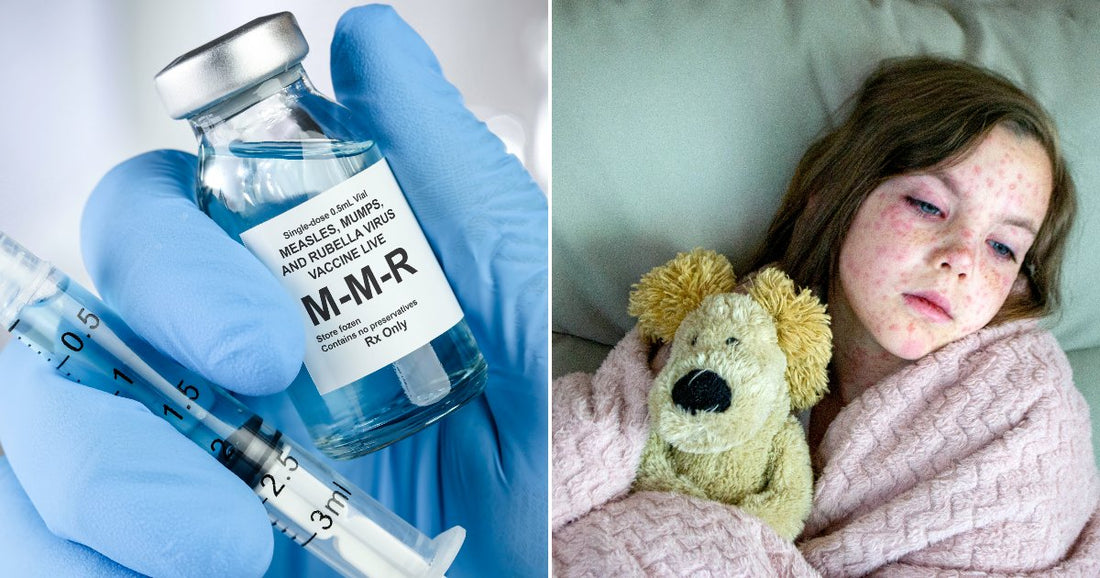
Decades of research involving millions of children across multiple countries have produced a clear, consistent finding: vaccines do not cause autism.
This is not a contested question within the scientific and medical communities. It has been examined from nearly every angle — different vaccine types, different schedules, different populations — and the answer has not changed. Yet a federal executive order signed in August 2026 calling for childhood vaccines to be spaced out has reignited public uncertainty around a theory that science has long put to rest.

A federal executive order signed in August 2026 calls for childhood vaccines to be spaced out, contradicting established medical guidance.
A Dangerous Executive Order With Real Consequences
The order, covered by the Associated Press, directly contradicts guidance from the country's leading medical organizations. The established childhood vaccine schedule is not arbitrary. It is designed to provide immunity at the ages when children are most vulnerable to specific diseases. Spreading vaccines out creates windows of unprotected time during which measles, whooping cough, polio, and other life-threatening illnesses can take hold. These are not minor inconveniences. In young children, they can cause permanent disability and death.
The American Academy of Pediatrics and other major medical groups have been unequivocal: alternative schedules based on autism fears offer no safety benefit and introduce genuine risk. Delaying a vaccine does not make it safer. It makes a child less safe.

The recommended childhood vaccine schedule is designed to protect children at the ages when they are most vulnerable to specific diseases.
How Federal Language Is Shifting — and Why That Matters
The concern is not limited to a single executive order. As AcademyHealth reported in late 2025, changes in CDC language around autism and vaccines began signaling a departure from the scientific consensus even before this order. When official federal communications introduce ambiguity about a settled scientific question, the effects ripple outward. Parents hear uncertainty where none exists in the evidence. Vaccination rates slip. Herd immunity weakens. And the communities most at risk — newborns too young to be vaccinated, immunocompromised children who cannot receive vaccines — lose the protection that depends on everyone else being vaccinated on time.

Spreading vaccines out creates unprotected windows during which diseases like measles, whooping cough, and polio can take hold.
The Origin of the Myth — and the Scale of Its Refutation
The vaccine-autism claim traces back to a single, small, fraudulent study that was retracted and whose lead author lost his medical license. What followed was one of the most extensive investigations in modern medical history. As Medical Daily detailed, researchers have since studied the question in populations spanning continents, using data from millions of children, across different vaccine formulations and schedules. None of it has produced credible evidence of a link. The original claim was not simply wrong — it was fabricated.
Despite this, the myth has proven extraordinarily resilient. Federal guidance that treats the question as open does not reflect new evidence. It reflects a political environment, not a scientific one. And the consequences of that distinction fall entirely on children.

The American Academy of Pediatrics and other leading medical organizations have stated that alternative vaccine schedules based on autism fears offer no safety benefit.
What Families and Providers Deserve
Parents making decisions about their children's health deserve accurate information from trusted institutions. Medical providers need clear, evidence-based guidance they can confidently pass on. When federal agencies introduce doubt about a question science has answered definitively, both groups are failed simultaneously — and children bear the cost.
Sign the petition below to urge federal health agencies and medical providers to keep vaccine policy grounded in evidence, not discredited theory.
Click below to make a difference.