
🚨Urgent: Missile Strikes Shelter in Ukraine! Rush Emergency Aid!
Trump's BLM Is Rounding Up Wild Horses and Selling Them to Slaughterhouses
Matthew Russell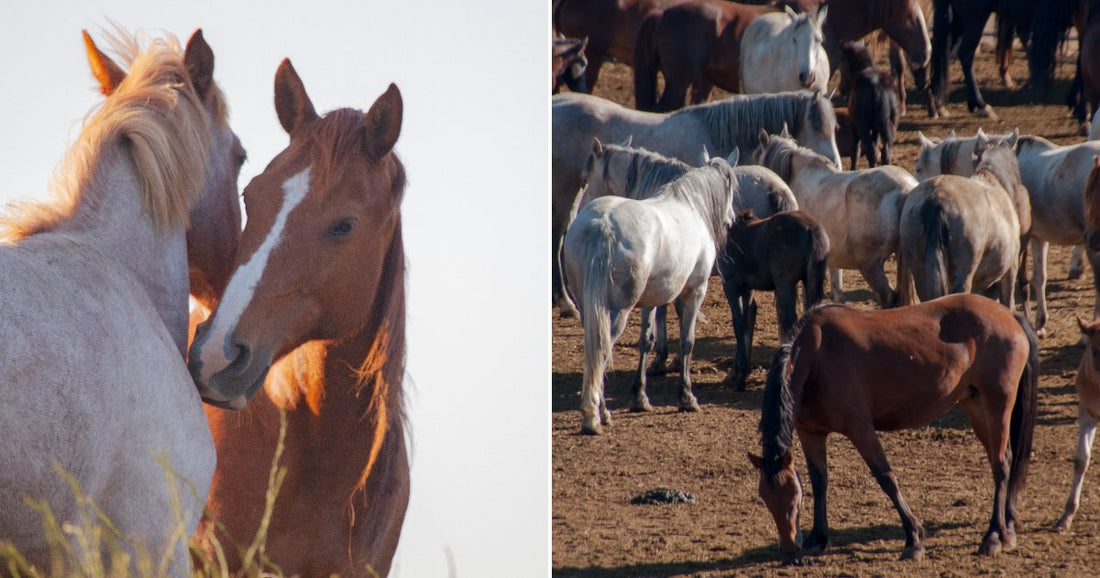
Wild horses and burros have roamed North America for centuries. They are also, since 1971, protected by federal law. The Wild Free-Roaming Horses and Burros Act was passed with broad public support and a clear mandate: these animals belong to all Americans, and killing them for commercial purposes is illegal. But a series of policy changes and legal loopholes have quietly created a pipeline from federal land to the slaughterhouse — and the flow is accelerating.

How the Pipeline Works
The Bureau of Land Management regularly rounds up wild horses and burros from public lands, citing herd management and limited range capacity. Animals that aren't adopted are placed into what the agency calls its "sale authority" program, which allows the BLM to sell horses directly to buyers — including kill buyers — with far fewer protections than adoption carries. Once a horse is sold rather than adopted, federal anti-slaughter provisions largely fall away.
The result is predictable. Raw Story has reported that thousands of horses sold through this program have ended up slaughtered — a process that happens across the border in Mexico and Canada, where commercial horse slaughter remains legal. The horses are transported, often in overcrowded and inhumane conditions, and killed for meat exported to overseas markets. Advocates have described it as slaughter in plain sight: technically legal, structurally enabled by the federal government, and invisible to most Americans.

Sales Are Surging
The scale of the problem is growing. According to Newsweek, federal wild horse sales have increased sharply under the current administration, raising alarms among equine protection organizations. More horses entering the sale pipeline means more exposure to kill buyers who can flip animals quickly for slaughter profit. The economics are brutal and simple: a horse purchased cheaply at a federal sale can be sold by the pound at a slaughter facility for several times the purchase price.
Roundups themselves have intensified. NPR documented recent large-scale gather operations in Colorado, where federal contractors removed hundreds of horses from public lands. Animals not claimed through adoption face an uncertain fate once they enter holding facilities — and the longer they remain unsold, the more likely they are to move into sale authority status.

The Legal Gap That Enables It
The Animal Welfare Institute has documented how the original 1971 protections have been eroded over decades through amendments and regulatory interpretations. Sale authority provisions, added later, created the gap that kill buyers now exploit. Without explicit statutory closure of that loophole — and without accountability requirements for where sale-authority horses ultimately go — the commercial slaughter of federally owned wild horses continues.

What Closing the Loophole Would Mean
Congress has the authority to amend the Wild Free-Roaming Horses and Burros Act to prohibit the sale of federally managed horses and burros to slaughter buyers, and to require lifetime tracking of animals that leave federal custody. The Department of the Interior has regulatory authority over the BLM and can impose stricter screening and accountability measures on purchasers right now, without waiting for legislation.
The 1971 law reflected a national consensus that these animals deserve protection. Closing the loopholes would mean that protection is more than a promise on paper.
Click below to make a difference.