
Rescuers Race Against the Tide to Save Dolphins Trapped in Marsh
Matthew Russell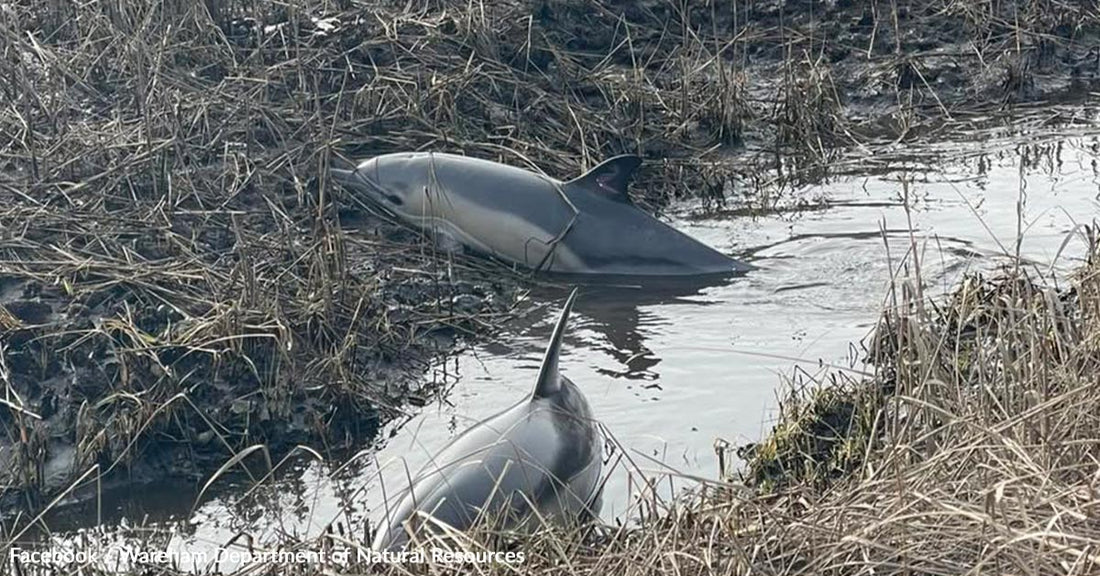
Two common dolphins were lifted from danger after becoming stuck in a Wareham marsh during an extreme low tide. Local officials reached Beaver Creek, a narrow channel off the Weweantic River, late Monday morning and found both animals alive but unable to reach deeper water. Staff described the dolphins as alert yet clearly trapped, reports Boston.com.

Two dolphins were discovered stranded during an extreme low tide.
A Race Against Dropping Water Levels
Responders from the Wareham Department of Natural Resources moved quickly once the call came in. The outgoing tide had left the dolphins exposed on the marsh surface, a situation also noted by UPI. The animals were active but stuck in mud and shallow pools, unable to push themselves back into the channel.
Cape Cod and nearby regions see frequent dolphin strandings each year, and Beaver Creek’s tight bends and flats have trapped animals before. Crews kept the dolphins stable while awaiting specialized help.

The animals were alive but trapped on a marsh surface.
IFAW Team Arrives With Specialized Equipment
The International Fund for Animal Welfare sent its Marine Mammal Stranding Response Team, which operates throughout the region. The group used stretchers designed for marine mammals and transported the two dolphins—one weighing close to 90 pounds and the other about 150 pounds—into a dedicated transport vehicle. This process, reported by NBC10, required careful handling to avoid stressing the animals.
Preliminary checks occurred at the scene. Full veterinary evaluations followed once the dolphins were moved from the marsh. IFAW teams will determine whether the pair can return to the ocean or need temporary care.
A Region Familiar With Marine Emergencies
The response highlights a broader pattern. Local rescuers manage dozens of dolphin strandings each year, with more than 100 cases already logged in the region this season, Boston.com reports. Shifting tides, narrow inlets, and complex coastal geography frequently put marine wildlife at risk.
Yet swift coordination—local officers securing the scene, IFAW teams mobilizing advanced equipment, and veterinarians assessing next steps—makes rescues like this possible.
Both dolphins survived the ordeal. Their final destination now depends on medical findings, but the rescue offered a welcome moment of hope in a year marked by repeated strandings.