
Giant Sargassum Blooms Are Choking Coasts and Changing the Ocean
Matthew Russell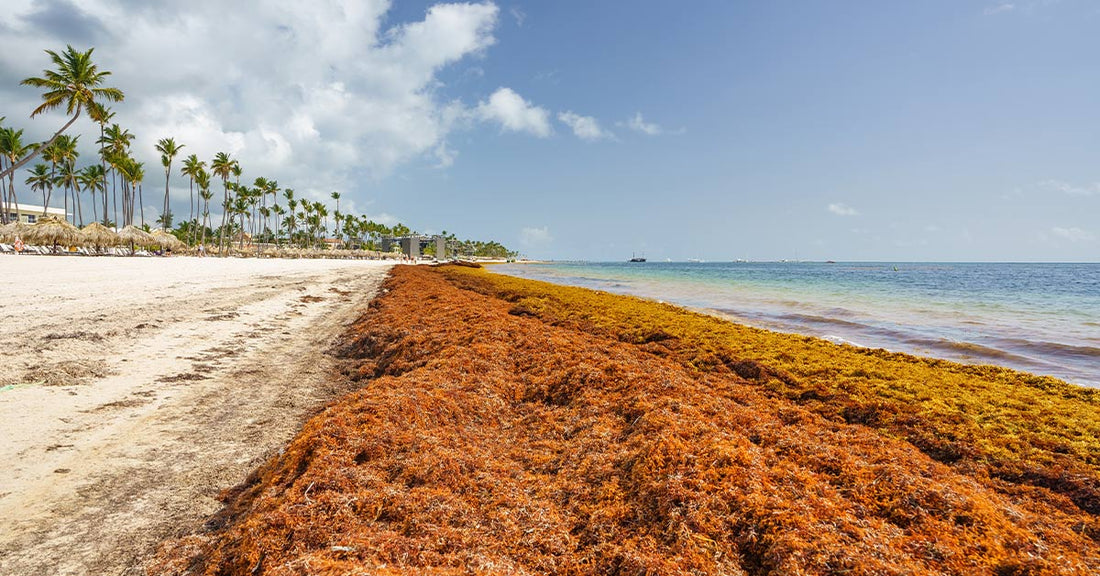
Sargassum once drifted quietly across the open Atlantic, forming loose rafts that sheltered fish, turtles, and invertebrates. Today, those floating forests are multiplying at a pace scientists say marks a fundamental change at the ocean’s surface.
Over the past two decades, floating seaweed has expanded rapidly across tropical and subtropical waters, with sargassum driving much of that growth. An analysis of global satellite records found that large mats of macroalgae are spreading far faster than microscopic algae, reshaping light and chemistry at the surface, The Guardian reports.
The shift accelerated after the late 2000s, aligning with rising ocean temperatures and increasing nutrient pollution from land-based sources, according to Phys.org.

Sargassum blooms are growing larger and more frequent worldwide.
A New Atlantic Conveyor Belt
The most visible sign of this change is the Great Atlantic Sargassum Belt, a massive ribbon of brown seaweed stretching from West Africa toward the Gulf of Mexico. Once rare outside the Sargasso Sea, these blooms now form annually and persist for months, scientists told Phys.org.
Artificial intelligence helped reveal the scale of the expansion. Researchers scanned more than a million satellite images to identify floating algae worldwide, finding that macroalgae mats are increasing by more than 13 percent per year in key regions. That growth now far outpaces changes in phytoplankton, researchers told The Guardian.
These mats darken waters below and trap heat above, altering how the upper ocean functions.
When Open-Ocean Habitat Hits the Shore
In open water, sargassum can provide habitat for juvenile fish and other marine life. Trouble begins when currents push it ashore.
Across the Caribbean, satellite monitoring shows sargassum levels now running more than 75 percent above historical averages, raising the likelihood of repeated beaching events in 2026, officials warned in a public advisory cited by VI Consortium.
Once stranded, the seaweed decomposes quickly. As MSN reports, that decay releases hydrogen sulfide gas, producing a strong odor and irritating eyes and airways, particularly for people with respiratory conditions.

The Atlantic now hosts a seaweed belt thousands of miles long.
The Economic Toll of Brown Tides
Coastal communities are absorbing mounting costs. In Florida, Puerto Rico, and the U.S. Virgin Islands, sargassum cleanup and tourism losses now total millions of dollars each year, with some estimates reaching far higher, researchers told MSN.
Economic modeling that included hotel cancellations, fishing impacts, and municipal cleanup expenses found that sargassum seasons are starting earlier and lasting longer across the western Atlantic. The same analysis noted that forecasting tools are improving, but prevention remains elusive.

Floating macroalgae is expanding much faster than phytoplankton.
Why the Blooms Keep Growing
Scientists point to overlapping drivers. Warmer surface waters favor faster seaweed growth, while nutrient runoff from agriculture and wastewater feeds blooms once they form, researchers told Phys.org. Shifts in ocean circulation then help concentrate sargassum into dense mats rather than dispersing it.
Taken together, these changes suggest the ocean has entered a new state that favors large floating algae, a possibility researchers described as a regime shift in coverage.
Living With a Changed Ocean
Communities are adapting with earlier warnings and expanded cleanup plans, especially in the Caribbean, where authorities expect another heavy sargassum year.
As floating forests continue to expand, they illustrate how offshore changes now reach straight to the shoreline. What grows far out at sea no longer stays there.